
Murshid’s oeuvre
We must realize that essentially Murshid did not write any books himself. Exceptions to this are his first work, “A Sufi Message of Spiritual Liberty,” his plays and the publications containing aphorisms like “Gayan,” “Vadan,” and “Nirtan.” But he rest of his oeuvre was created from the many lectures he gave over the years:
- In London and other cities in the UK, during Wold War I
- During his travels, when visiting the centres in the US and several European countries, throughout the twenties
- At the Suresnes Summer Schools from 1922 onward (June till August)
In Suresnes his secretaries (Sakina Nekbakht Furnée and Kismet Stam) started to take down his lectures in shorthand. Together with Murshida Sharifa Goodenough they also selected, arranged, and edited series of his lectures based on a common theme, for instance: music and sound, health, education, morality, mysticism, happiness, and so on. Murshida Sherifa Goodenough had a leading role in the proces of compiling new issues. During his lifetime Murshid himself always had the supervision over the publication of his work. After his passing Goodenough continued to make new books ready for publication, by then always after consulting the Head Quarters of the Sufi Movement in Geneva.
Not all books were created this way. For example:
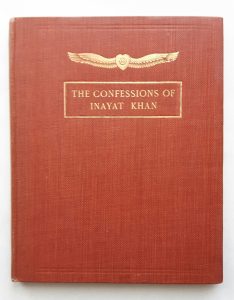
- ‘Confessions’ (an early biography from 1915) was written by Miriam Bloch
- The books with Songs and poetry were compiled by Murshid in close co-operation with Jessie Duncan Westbrook
- The books by Sherifa Goodenough (Aqibat, Life after Death, Love, Human and Divine, The Phenomenon of the Soul ) and Zohra Williams (Pearls from the Ocean Unseen) were based on Murshid’s lectures, but do not reflect his exact words per se
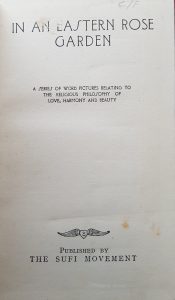
- ‘The Story of my Mystical Life’ (a biographical lecture from 1919), ‘In an Eastern Rose Garden’ (1921) and ‘The Way of Illumination’ were edited by Dr. O.C. Gruner
- ‘The Purpose of Life’ (1927) was compiled by Mumtaz Armstrong
- The collection ‘Aphorisms’ (1927) was compiled by Kefayat Gladys Lloyd and contains sentences from the various lectures of Murshid
- The ‘Biography of Pir-o-Murshid Hazrat Inayat Khan’ (1979, revised edition 2020) was compiled, edited and supplemented by Munira van Voost van Beest and Elise Guillaume – Schamhart in the seventies, based of the reports of Meheer Bakhsh (biography section) and Murshid’s dictations to Sakina (Nekbakht) Furnée (the autobiography part)
Knowing all this we now give a survey of Murshid’s body of work in chronological order:
- A Sufi Message of Spiritual Liberty 1913
- The Sufi Call 1914/1915
- The Confessions of Inayat Khan 1915
- The Diwan of Inayat Khan, Rendered from the Urdu by Inayat Khan en Jessica Duncan Westbrook. 1915
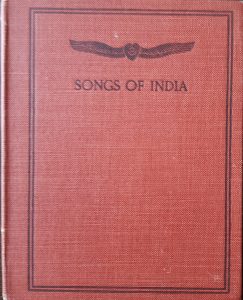
- Songs of India, Rendered from the Urdu by Inayat Khan en Jessica Duncan Westbrook. 1915
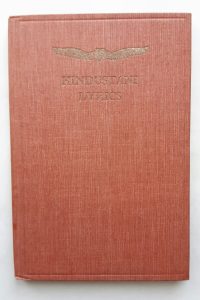
- Hindustani Lyrics, Rendered from the Urdu by Inayat Khan en Jessica Duncan Westbrook. 1915
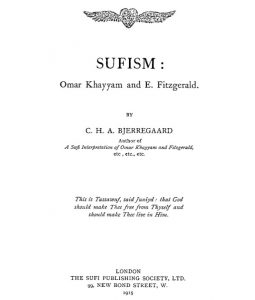
- Sufism Omar Khayyam and E. Fitzgerald 1915
- Aqibat, Life after Death 1918
- Love, Human and Divine 1919
- The Phenomenon of the Soul 1919
- Pearls from the Ocean Unseen 1919
- The Story of my Mystical Life 1919
- In an Eastern Rose Garden 1921
- Bowl of Saki 1921
- The Message 1921
- The Way of Illumination 1922
- The Inner Life 1922
- Notes from the unstruck Music from the Gayan ‘manuscript’ 1923
- The Alchemy of Happiness 1923
- The Mysticism of Sound 1923
- The Soul, Whence and Wither 1924
- The Divine Symphony or Vadan 1926
- The Purpose of Life 1926-1927
- Aforisms 1927
- The Unity of Religious Ideals 1927
- Nirtan or the Dance of the Soul 1928
- Health 1931
- Character Building and the Art of Personality 1931
- Education 1934
- The Mind World 1935
- Moral Culture 1937
- Cosmic Language 1937
- Rasa Shastra 1938
- Metaphisics 1939
- Philosophy, Psychology and Mysticism 1946
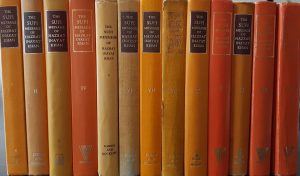
Collected Work I: The Sufi Message of Hazrat Inayat Khan
Collected work of Hazrat Inayat Khan in thirteen volumes. Edited by Huzurnavaz baron van Pallandt. Issued from 1960 to 1967.
Published by Barrie and Rockliff, later by Barrie and Jenkins and finally by Servire Holland.
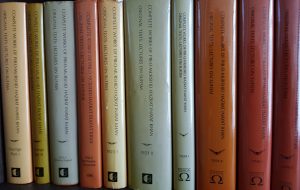
Collected work II: Complete Works of Pir-o-Murshid Hazrat Inayat Khan
Source edition published from 1982 on. All Lectures by Hazrat Inayat Khan are presened in a chonological order, based on the original shorthand notes by his secretaries and provided with numerous footnotes. In a number of volumes the lectures of 1922 to 1926 are included. Besides that there are two volumes with the complete collection of Murhsid’s sayings. In the future the plan is to publish the earlier lectures from before 1922.
Published by Omega Publications.
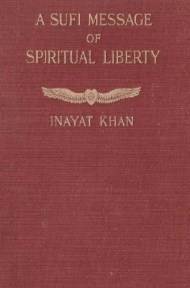
Sufi Message of Spiritual Liberty
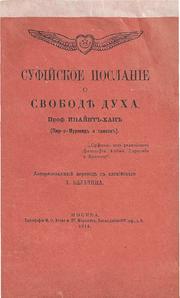
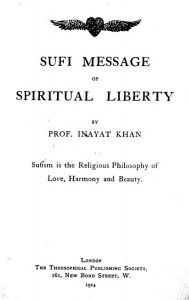
Murshid’s first issue on Sufism in the West. The manuscript was written in English and first appeared in a French translation in 1913. Later, when the family toured in Russia (October 1913 – May 1914) , it was translated into Russian by Henry Balakin, an officer from the Russian army. Finally, when Murshid returned to England in September 1914, the book was published in it’s original English version.
The London Issues 1915 – 1920
During the time that Murshid lived in London, eleven book(let)s were issued. These works were modest in size and were composed (and highly adapted) by a number of English mureeds. All books were published at the Sufi Publishing Society.
Miriam Bloch compiled the first biography of Hazrat Inayat Khan with the title ‘The Confessions of Inayat Khan’ (see photo on the right).
Three poetry and song bundles were compiled by the poet Jessie Duncan Westbrook. She translated poems and songs from Urdu into English. The collections were published in 1915 under the titles: ‘The Diwan of Inayat Khan’, ‘Songs of India’ and ‘Hindustani Lyrics’. All three bundles had the subtitle: ‘Rendered from the Urdi by Inayat Khan and Jessica Duncan Westbrook.
‘Sufism Omar Khayyam and E. Fitzgerald’ by Bjerregaard.
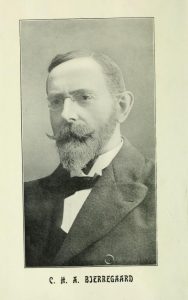
In June 1911, Murshid met C.H.A. Bjerregaard (1845 – 1922) in New York. Bjerregaard was the head of the Astor Library. He asked him to compile a book of Omar Khayyam’s poems, based on E. Fitzgerald’s English translation. The book was published in London in 1915.
One of the most influential mureeds from the London time was Lucy Sharifa Goodenough. She published three books in the years 1918 and 1919, in which she tries to summarize and explain the ideas of Inayat Khan. The works are included in part V of the collected work of Inayat Khan ‘The Sufi Message of Hazrat Inayat Khan’. The titles are: ‘Aqibat, Life after Death’, ‘Love, Human and Divine’ and ‘The Phenomenon of the Soul’. She called the series: ‘Words of Inayat’.
Another mureed from the London time, Miss Zohra Williams, published in the same year, 1919, and in the same layout as Goodenough’s series a book titled: ‘Pearls from the Ocean Unseen’. She called her series ‘Words of Inayat’ but this work seems to be the only one in the series.
Two other booklets from the London period appeared edited by dr. O. C. Gruner. This doctor from Leeds in England met Inayat Khan when he gave a number of lectures in Leeds. One of the speeches had an autobiographical character. The text has been published by Gruner under the title: ‘The Story of my Mystical Life’.
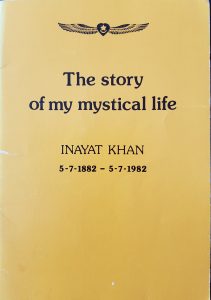
Jubilee edition of The Story of my Mystical Life
on the occasion of the hundredth anniversary of Murshid’s birth
In Eastern Rosegarden is the first extensive book of Murshid. It was published in 1921 by Gruner and contained a large number of lectures from the English years 1918 – 1920. The first and second editions published by Camelot Press Limited in England contain a prologue, an epilogue and a ‘suject index’. These are lacking both in the third edition of Kluwer and in the Volume edition of Van Pallandt from 1962. This last edition, however, contains 11 extra speeches that are missing in the previous editions.